Mantra Upasana
Mantra is the oldest technology for the mind. A practice chosen for your chart and intention becomes a daily anchor for focus, protection and peace.
- 45 minutes
- Online or in person
- Personal practice
Devotion, through repetition
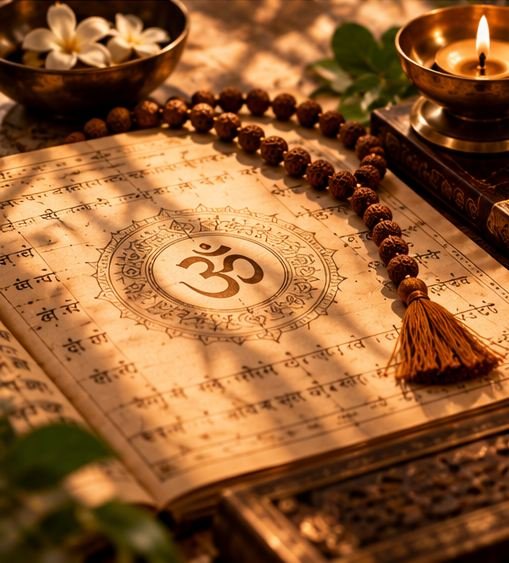
Upasana means "sitting near" the divine. Through japa, the steady repetition of a sacred sound, the mind settles, intention gathers and the practice becomes a quiet source of strength.
Anita chooses mantras that suit your chart, your goal and your life, whether that is a planetary mantra, a deity mantra or a simple bija.
A practice made for you
Planetary mantras
To strengthen a supportive planet or calm a challenging one.
Ishta devata
Connecting with the form of the divine that resonates with you.
Pronunciation
Syllable-by-syllable guidance so the sound is right.
Japa method
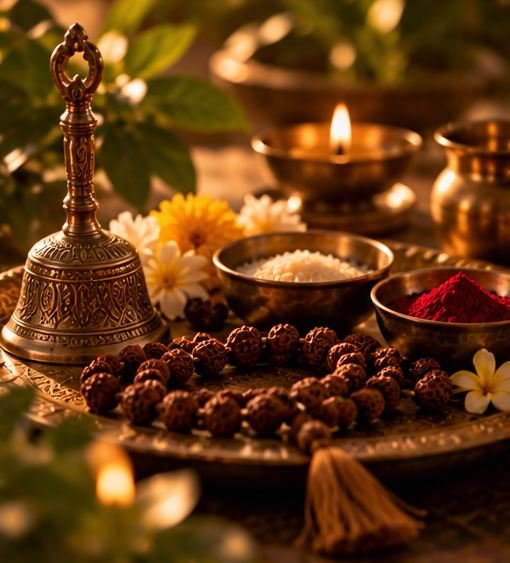
The mala, count, posture and breath that steady the mind.
Timing & sankalpa
When to begin, the best time of day, and setting your intention.
Supporting ritual
Simple lamp, offering and altar practices to deepen it.
From first sound to steady practice
You'll be guided until the practice feels natural.
- Step 01
Intention
We talk about what you are seeking and what you are facing.
- Step 02
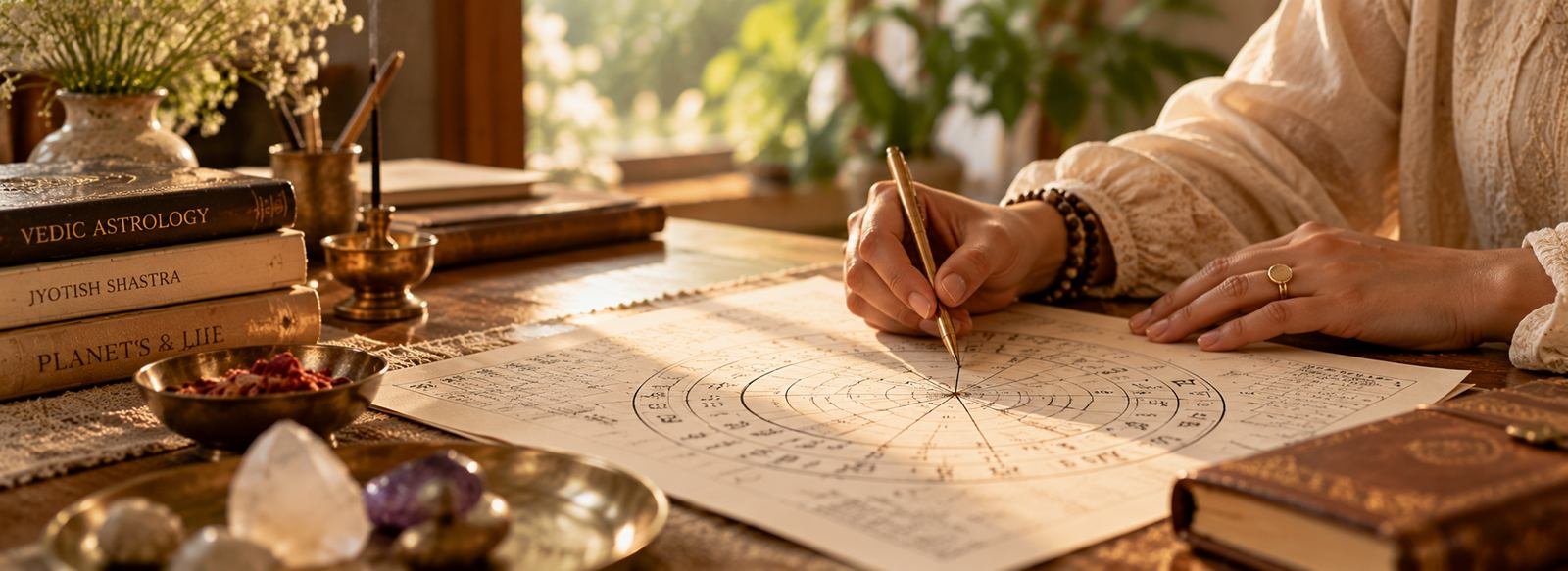
Chart check
The right mantra and deity are selected from your chart.
- Step 03
Learn the mantra
Pronunciation, rhythm and method, practised together.
- Step 04
Daily sadhana
A routine that fits your mornings or evenings.
Who it is for and what you receive
Who it's for
- Anyone given a mantra as a remedy who wants to do it correctly
- Those seeking calm, focus or protection during a hard period
- Beginners curious about a daily spiritual practice
- Practitioners wanting to deepen an existing sadhana
What you receive
- Your personal mantra with its meaning
- A transliteration and pronunciation guidance
- Count, timing and the right day to begin
- A simple daily sadhana plan
On mantra
Do I need to know Sanskrit?
No. Pronunciation is taught syllable by syllable, and you receive a transliteration and an audio reference to practise with.
How long should I chant each day?
Most practices start at one mala (108 repetitions), which takes 10 to 15 minutes. Consistency matters far more than duration.
Can anyone practise mantra upasana?
Yes. Practices are chosen to suit your background, beliefs and routine, and they can be done at home.